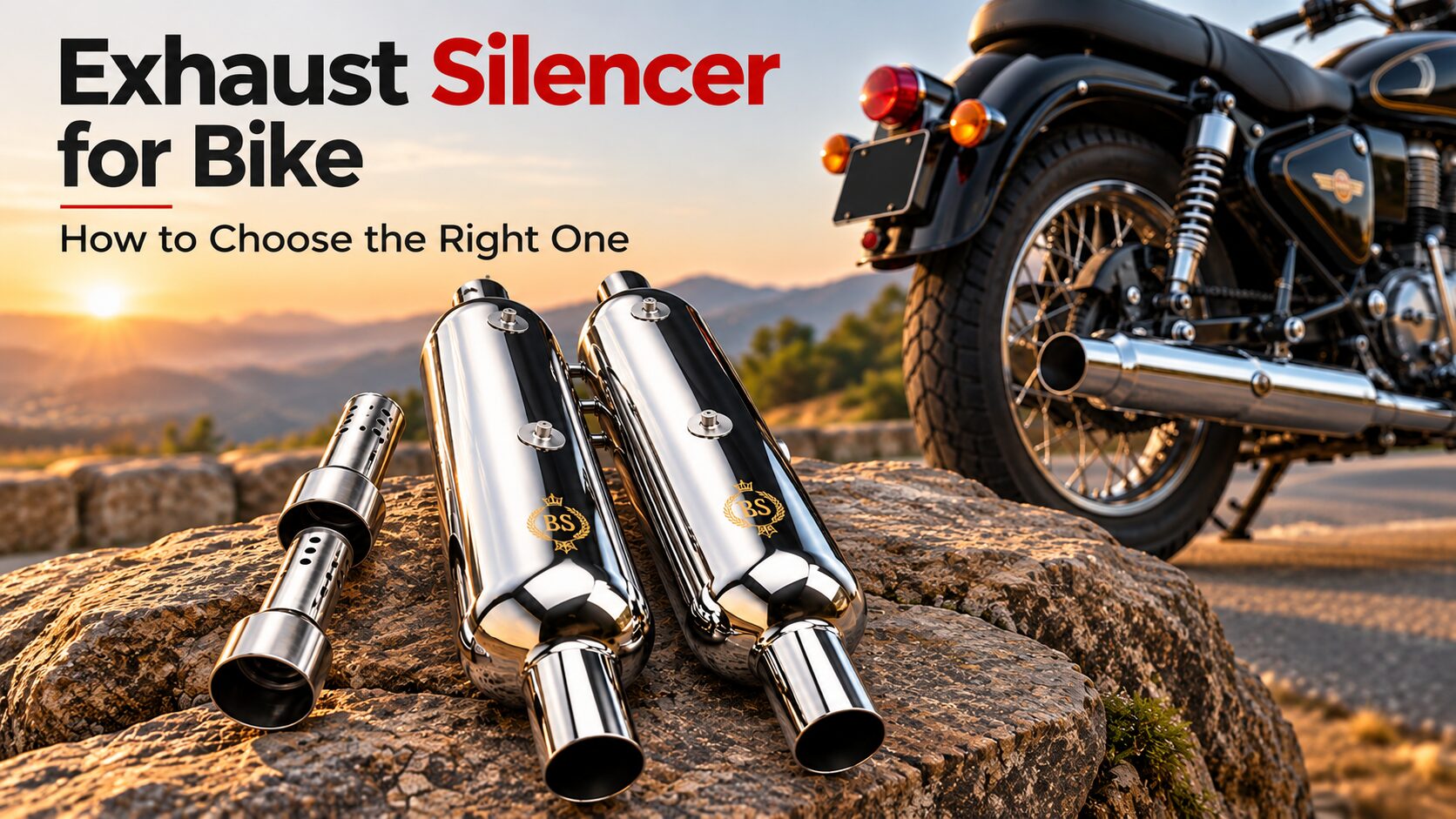
A bike’s exhaust note is part of its personality. Some riders prefer the quiet, balanced sound of a stock setup, while others want something deeper and more noticeable.
But choosing an exhaust silencer for your bike shouldn’t be only about making it louder.
The right silencer needs to fit your motorcycle properly, suit the way you ride, use suitable materials, and produce a sound you’re actually comfortable living with every day.
If you’re planning to replace your existing silencer or exploring aftermarket options, here’s what you should know before buying one.
What Does an Exhaust Silencer Do?
An exhaust silencer, commonly called a bike silencer or muffler, is part of the motorcycle’s exhaust system.
Its main job is to reduce and control the sound produced as exhaust gases leave the engine.
Inside a silencer, chambers, tubes, and sound-absorbing materials can help manage exhaust pulses and reduce noise before gases exit through the exhaust outlet. The exact construction varies depending on the silencer design.
This is why two silencers fitted to similar motorcycles can sound noticeably different.
Why Do Riders Change Their Bike Silencer?
There isn’t one reason that applies to every rider.
Sometimes the original silencer is old, rusted, or damaged. In other cases, the rider simply wants a different look or exhaust note.
Common reasons include:
- Replacing a worn or damaged silencer
- Changing the motorcycle’s appearance
- Getting a different exhaust note
- Choosing a stainless-steel option
- Replacing an existing aftermarket exhaust
- Customizing a Royal Enfield or another motorcycle
Whatever your reason, compatibility should come before sound or appearance.
A silencer that looks great online isn’t useful if it isn’t designed to fit your particular bike.
Stock vs Aftermarket Bike Silencer: What’s the Difference?
A stock silencer is designed by the motorcycle manufacturer for that specific model and its original exhaust setup.
An aftermarket silencer is produced separately and may offer a different design, finish, construction, or exhaust note.
Neither should be chosen simply because one is “better.”
If you’re considering an aftermarket bike silencer, check whether it is designed for your exact motorcycle model and whether any additional fitting or modification is required.
Don’t assume that a silencer made for one Royal Enfield, for example, will automatically fit another Royal Enfield model.
Model-specific fitment matters.
What Should You Check Before Buying an Exhaust Silencer?
This is where many riders make a mistake.
They hear an exhaust sound in a reel or see a good-looking silencer and immediately want the same one.
Before ordering, check these points.
1. Your Exact Bike Model
Start with compatibility.
Check the motorcycle name, variant, and, where relevant, model year.
For example, an exhaust designed for a Classic may have different fitment requirements than one made for a Hunter 350, Meteor 350, or Interceptor 650.
If the product listing doesn’t clearly mention your motorcycle, confirm compatibility before ordering.
2. Material
Material matters because the exhaust is constantly exposed to heat, dust, moisture, and road conditions.
Stainless steel is commonly used in aftermarket motorcycle silencers because of its appearance and resistance to corrosion.
However, don’t judge a product by the words “stainless steel” alone.
Look at the overall construction, welding, finish, and mounting points as well.
3. Sound
A loud exhaust isn’t automatically a good exhaust.
Think about how you actually use your motorcycle.
A very aggressive exhaust note might sound exciting for a few seconds, but it may become tiring during daily commuting or long-distance riding.
Choose the sound character you want rather than simply looking for the loudest option.
4. Fit and Installation
A properly fitted silencer should sit securely and align correctly with the motorcycle’s exhaust setup.
Poor fitment can create unnecessary vibration, rattling, or exhaust leakage.
If you’re unsure about installation, getting the silencer fitted by an experienced motorcycle mechanic is usually the sensible option.
5. Overall Design
Your silencer becomes a visible part of the bike.
Depending on your motorcycle, you may prefer:
- A classic long-bottle design
- A short or compact exhaust
- A black finish
- A polished stainless-steel finish
- A design that stays closer to the original styling
Pick something that works with the overall look of your motorcycle rather than treating the exhaust as an isolated accessory.
Read More: https://bsautoaccessories.com/best-handlebar-for-your-bike/
What Is a DB Killer?
If you’ve been searching for aftermarket silencers, you’ve probably come across the term DB killer.
A DB killer is an insert used in some exhaust systems to help reduce the exhaust sound level.
Whether a particular silencer includes one, supports one, or allows it to be removed depends on its design.
If controlling exhaust volume is important to you, check the product specifications before buying rather than assuming every aftermarket silencer has the same setup.
Does Changing a Silencer Increase Bike Performance?
This is an area where riders often come across exaggerated claims online.
Simply changing a silencer does not automatically mean more power, better mileage, or better engine performance.
Motorcycle exhaust systems are designed around factors such as exhaust flow, engine tuning, and emissions requirements. Changing components can alter how that system behaves.
If you’re considering a major exhaust modification for performance reasons, it’s better to get advice specific to your motorcycle rather than expecting a universal performance gain from a new silencer.
For everyday buyers, fitment, build quality, sound, and compatibility are usually much more useful things to focus on.
What About Bike Silencer Noise Rules in India?
This is something you shouldn’t ignore when buying an aftermarket exhaust.
Indian motor-vehicle rules include requirements relating to silencers and vehicle noise. Because compliance can depend on the vehicle and the modification being made, don’t assume that an aftermarket exhaust is automatically road-legal simply because it is available for sale.
Avoid making modifications intended purely to create excessive road noise, and check the applicable requirements before changing your motorcycle’s original exhaust setup.
If you’re unsure, retaining the manufacturer-approved exhaust configuration is the safer option from a compliance perspective.
Looking for an Exhaust Silencer for Your Bike?
Buying a silencer online becomes much easier when you start with the motorcycle rather than the exhaust style.
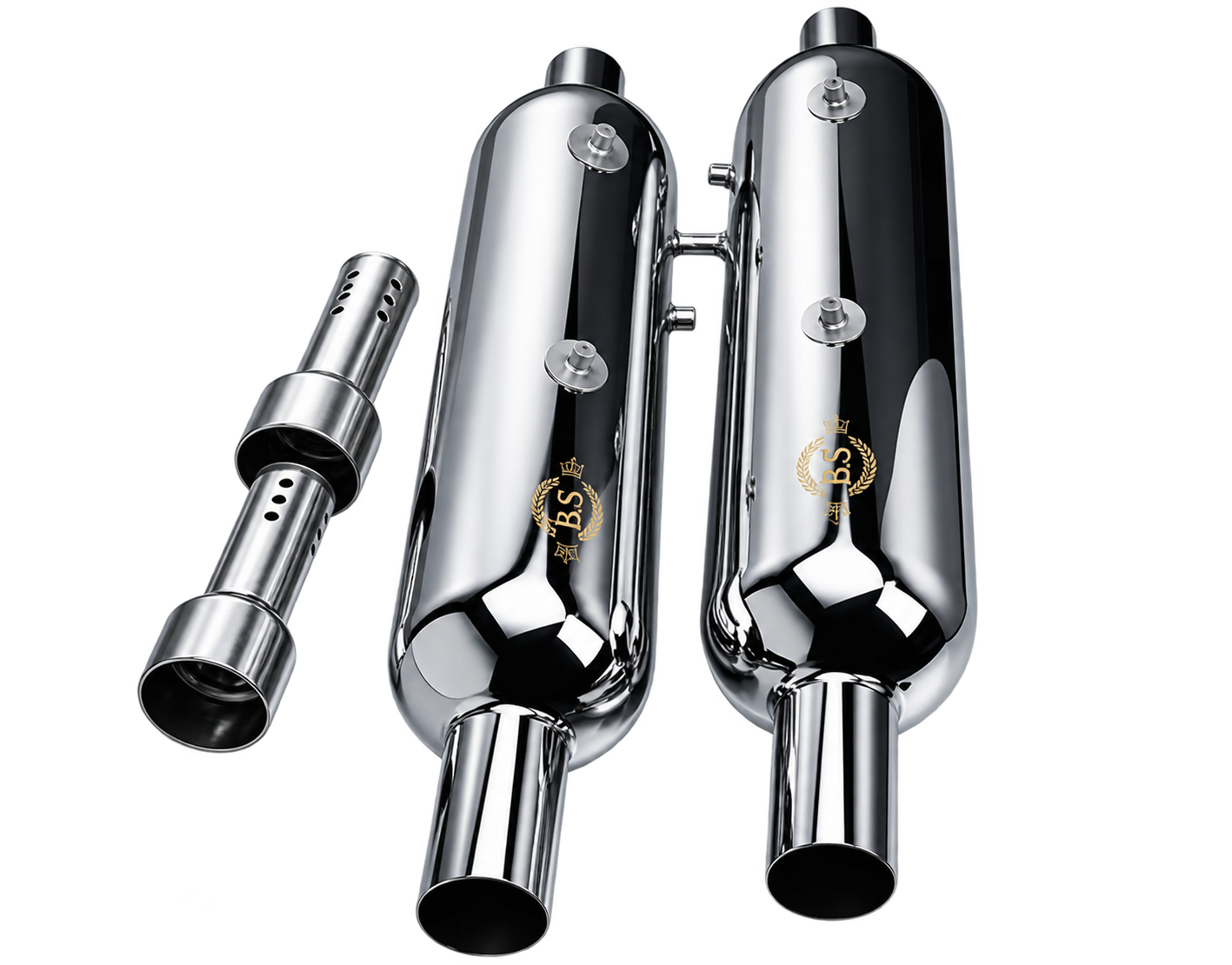
At BS Auto Accessories, you can browse motorcycle silencers and exhaust options for different bike models.
Instead of choosing only by appearance, check the product page for the bike model, construction, finish, and fitment information.
You can also explore other bike accessories for touring, comfort, protection, and everyday riding: https://bsautoaccessories.com/
If you’re unsure whether a particular silencer fits your motorcycle, confirm the bike model and compatibility before placing your order.
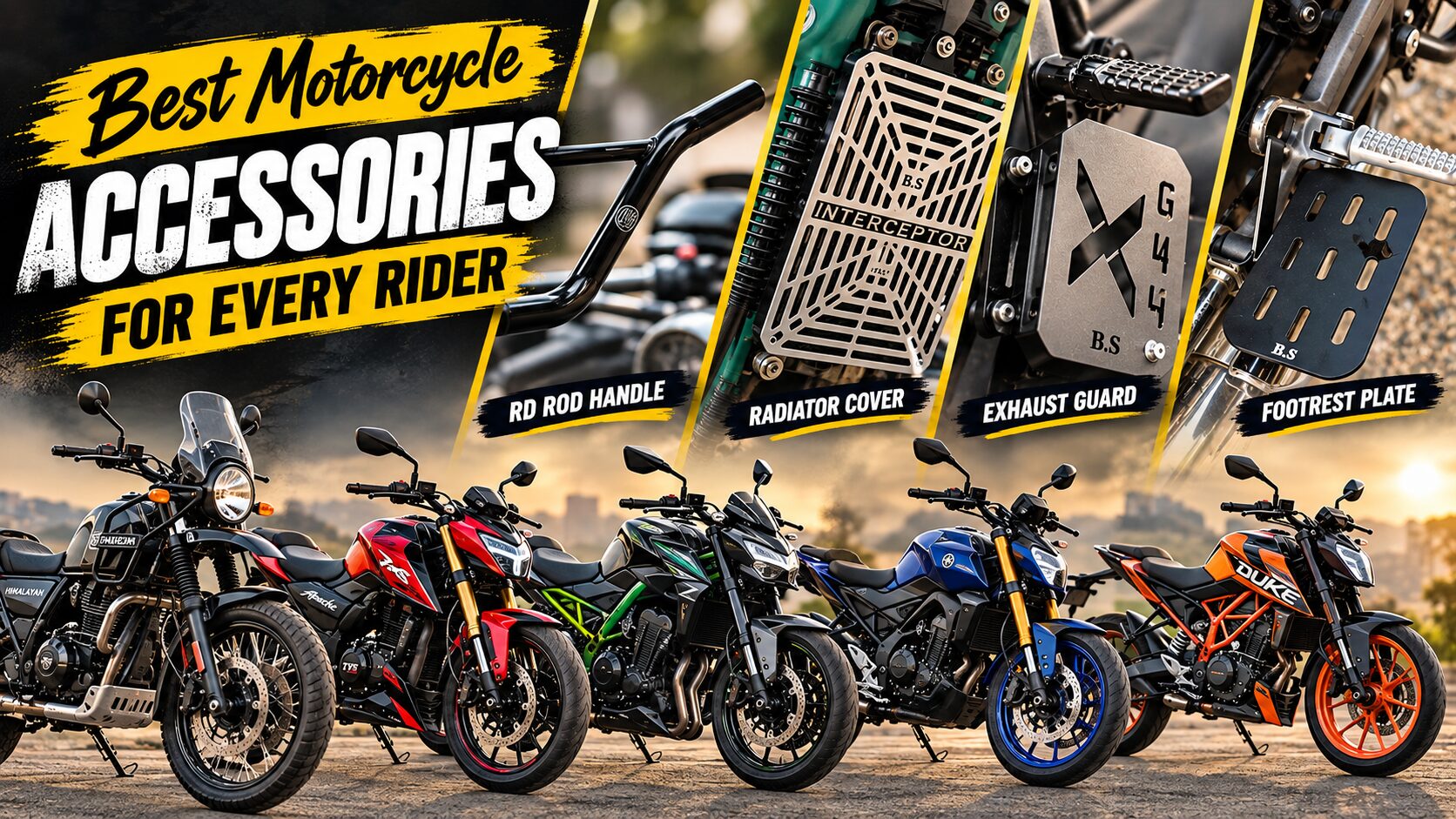
Other Bike Accessories Worth Considering
An exhaust isn’t the only upgrade that can change how practical your motorcycle feels.
Depending on your bike and riding style, you may also want to explore accessories such as:
- Backrests
- Crash guards
- Footrests
- Saddle stays
- Luggage racks
- Top racks
- Radiator guards
- Other model-specific motorcycle accessories
The important thing is to choose accessories made for the motorcycle you actually own instead of buying universal-looking products and hoping they fit.
Final Thoughts
Choosing an exhaust silencer for your bike doesn’t need to be complicated.
Start with your exact motorcycle model. Check compatibility and material. Decide what type of sound and appearance you want. And don’t ignore installation or applicable noise requirements.
Most importantly, don’t buy a silencer based only on how loud it sounds in a video.
A good choice is one that fits your bike properly, matches the look you’re after, and works for the way you actually ride.

Motorcycle Accessories in Sri Lanka: What Riders Should Actually Buy
10 Bike Accessories From ₹800 to ₹2,000: What Can You Get for Your Budget?